

 Oral surgery Wisdom teeth removal recovery: a day-by-day guide
What to expect each day after wisdom tooth surgery, how to look after the sockets and when to call your surgeon.
Oral surgery Wisdom teeth removal recovery: a day-by-day guide
What to expect each day after wisdom tooth surgery, how to look after the sockets and when to call your surgeon.
Oral surgery
When should a GP dentist refer to an oral surgeon?
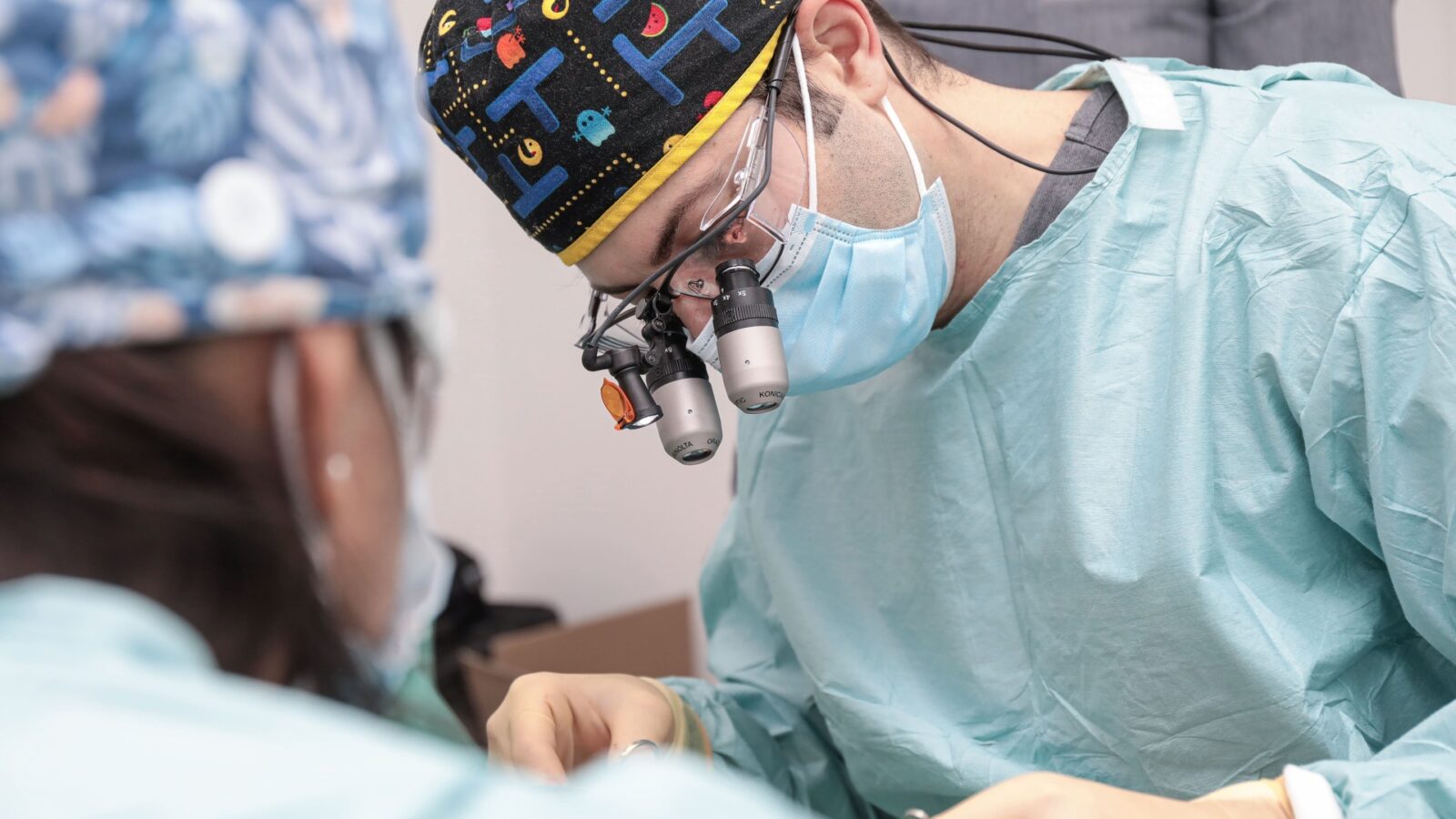
How do you decide when to refer to an oral surgeon?
Knowing when to refer to an oral surgeon protects both the patient and the referring dentist. The General Dental Council expects every registrant to work within their knowledge, skills and competence, and to refer patients on when a treatment falls outside that scope. In oral surgery, there is no fixed boundary. It depends on the dentist’s own training, experience and facilities, the difficulty of the procedure and the patient’s medical background.
NHS England’s commissioning guidance for oral surgery describes care in levels of complexity. The guidance places Level 1 procedures within the competence of a general dentist. Level 2 procedures need enhanced skills and experience, so a dentist with additional training or a specialist may carry them out. Level 3 procedures require a specialist or consultant, often in a hospital setting. The levels are a useful framework for private referrals too, even though local criteria for NHS services vary.
Which clinical situations commonly justify referral?
The table below lists common referral triggers. It is not exhaustive, and local NHS pathways may apply different criteria.
| Situation | Why referral may help |
|---|---|
| Impacted or partially erupted lower third molars | Bone removal, sectioning and proximity to the inferior alveolar nerve increase complexity |
| Roots close to the inferior dental canal or the maxillary sinus | Higher risk of nerve injury or oroantral communication |
| Retained or fractured roots not removable by forceps or luxation | Surgical access and bone removal needed |
| Ectopic, supernumerary or impacted teeth, including canines | Surgical exposure or removal, often coordinated with orthodontic care |
| Oroantral communication | May need surgical closure |
| Soft tissue lesions needing biopsy | Diagnosis and appropriate excision or incisional biopsy |
| Implant planning with limited bone | Grafting, sinus lift, guided placement or full-arch treatment |
| Medically complex patients | Antiresorptive drugs, anticoagulants, radiotherapy history or significant systemic disease |

When should you refer third molars to an oral surgeon?
In fact, third molar surgery is one of the most common reasons for referral. Removal needs a clear clinical indication. NICE guidance advises against the prophylactic removal of pathology-free impacted wisdom teeth. The Royal College of Surgeons of England’s Faculty of Dental Surgery has also published guidance on the indications for removal. Recognised indications include recurrent pericoronitis or a single severe episode, caries in the third molar or distal caries in the second molar that other treatment cannot manage, periodontal problems affecting the second molar, cysts and other pathology, and removal as part of other planned treatment.
Referral is sensible when the tooth sits deep in the bone, when bone removal or sectioning is likely, or when a panoramic radiograph suggests proximity to the inferior dental canal. Signs include darkening of the root, interruption of the canal outline or diversion of the canal. A CBCT scan can then clarify the relationship. More on surgical management is on the wisdom teeth removal page.
Which medical histories should prompt referral or extra caution?
Some patients are safe to treat in primary care with appropriate precautions, while for others it is better to refer to an oral surgeon. Points that commonly influence the decision include:
- Antiresorptive and antiangiogenic drugs: bisphosphonates, denosumab and some cancer therapies carry a risk of medication-related osteonecrosis of the jaw. National guidance, such as that from the Scottish Dental Clinical Effectiveness Programme, helps stratify risk.
- Anticoagulants and antiplatelets: most patients can have extractions without stopping their medication, with local haemostatic measures, but complex surgery or unstable INR may warrant referral.
- Head and neck radiotherapy: extractions in irradiated bone carry a risk of osteoradionecrosis and normally need hospital management.
- Significant systemic disease: poorly controlled diabetes, bleeding disorders, immunosuppression or recent cardiac events.
- Anxiety requiring sedation: where the practice does not provide conscious sedation, referral to a service that does may be appropriate.
How should you handle suspected oral cancer?
Refer any lesion suspicious of malignancy urgently, in line with NICE guidance on suspected cancer. Examples include an unexplained ulcer persisting beyond three weeks, a red or mixed red and white patch, an unexplained lump, or unexplained tooth mobility without periodontal disease. In practice, that means using the local urgent suspected cancer pathway to the hospital oral and maxillofacial or head and neck team, usually via the local electronic referral system.
A private referral to a specialist oral surgeon is not a substitute for the urgent cancer pathway. For lesions that are not suspicious but need diagnosis, such as mucoceles, fibroepithelial polyps or persistent white patches without worrying features, an oral biopsy by an oral surgeon can be appropriate.
When should you refer implant cases to an oral surgeon?
Implant dentistry is not a GDC specialty, and many general dentists place implants after postgraduate training. Referral is worth considering when bone volume is low or grafting or a sinus lift is likely. It also helps when the implant sits in the aesthetic zone with thin tissues, when you plan an immediate implant after a difficult extraction, or when the patient needs full-arch treatment. Referral is also useful when the patient’s medical history adds risk.
A common model is for the surgeon to place the implant and any graft, and for the referring dentist to restore it. Agreeing roles at the outset, including who provides the final crown and long-term maintenance, keeps the patient’s care coordinated. The dental implants page explains the surgical side in more detail.
What about soft tissue and minor oral surgery?
Several smaller procedures sit at the boundary between general practice and specialist care. A frenectomy for a tight labial or lingual frenum, exposure of an impacted canine for orthodontic alignment, removal of mucoceles and small benign lumps, and closure of an oroantral communication are all procedures that some general dentists carry out and others prefer to refer. The deciding factors are training, regular experience and the facilities to manage complications.
Collaboration with orthodontists is also particularly important for impacted canines and frenectomies, where timing matters. A clear joint plan, agreed before surgery, avoids repeated procedures and gives the patient a coherent explanation of what will happen.
What should you do after a complication in practice?
Complications happen even in experienced hands. A fractured root that you cannot retrieve safely, a suspected oroantral communication, a displaced tooth fragment or unexpected altered sensation after an extraction all call for early specialist advice. It is usually better to stop, stabilise the situation, explain clearly to the patient and refer promptly than to persist with a procedure that is becoming more difficult. Accurate notes and radiographs of what happened help the receiving surgeon plan the next step.
What makes a good referral to an oral surgeon?
A well-prepared referral speeds up triage and helps the patient arrive with realistic expectations. Useful information includes:
- Patient details and preferred contact information.
- The specific reason for referral and the question you want answered.
- A current medical history and medication list, including antiresorptives and anticoagulants.
- Recent, diagnostic-quality radiographs, ideally the original files rather than screenshots or photographs.
- Relevant history, such as episodes of pericoronitis, previous treatment or failed extraction attempts.
- Whether you plan to provide further treatment afterwards, such as the restoration of an implant.
- Confirmation that the patient understands the reason for referral.
Patients can feel anxious about a referral. So it helps to explain that a specialist referral is a routine part of good care, and why you are making it. That makes the first consultation easier.
How urgent is a routine oral surgery referral?
Most oral surgery referrals are routine, but some patients need an earlier appointment. Recurrent pericoronitis with trismus, a suspected oroantral communication, a displaced root fragment or a failed extraction with ongoing pain are examples where a prompt appointment helps. Spreading facial swelling, difficulty swallowing or breathing, or a raised floor of mouth are emergencies and need same-day hospital assessment, not a routine referral. Marking the urgency clearly helps the receiving clinic triage correctly.
What should the referring dentist expect back?
A good referral relationship works in both directions. The referring dentist should receive acknowledgement of the referral, a summary after consultation and a report once treatment is complete, including any findings relevant to ongoing care. The patient should return to the referring practice for routine dental care.
Dr Battista is on the GDC Specialist List in Oral Surgery and accepts referrals for oral surgery and implant treatment in London. Referral details, including how to send radiographs and scans, are on the for dentists page. If you are unsure whether to refer to an oral surgeon, you can also get in touch to discuss a specific case first.
Frequently asked questions
Do I need to refer every impacted wisdom tooth?
No. Removal should only be considered when there is a clinical indication, in line with NICE and Royal College of Surgeons guidance. Many impacted wisdom teeth without pathology can be monitored. Referral is sensible when an indicated tooth is deeply impacted, needs bone removal or sectioning, or shows radiographic signs of proximity to the inferior dental canal.
Can I extract teeth for patients taking anticoagulants?
Most patients taking anticoagulants can have simple extractions in primary care without stopping their medication, using local haemostatic measures and following national guidance on timing and INR checks. Referral is reasonable for complex surgical extractions, multiple extractions, unstable anticoagulation or when other medical conditions add risk. Medication should never be stopped without the prescriber's advice.
Should suspected oral cancer go to a private oral surgeon?
No. A lesion suspicious of cancer should be referred urgently through the local suspected cancer pathway to the hospital oral and maxillofacial or head and neck team, in line with NICE guidance. Private specialist referral can be appropriate for benign-looking lesions that need diagnosis, but it should never delay urgent cancer assessment.
What radiographs should I send with a referral?
Send recent, diagnostic-quality images of the area concerned, ideally as original digital files. For third molars, a panoramic radiograph is usually helpful. For implant cases, any existing CBCT data is valuable. Good images can speed up triage and sometimes avoid repeat exposure, although the surgeon may still request further imaging if needed.
Will my patient come back to me after treatment?
They should. A referral is for a specific episode of care, and the patient returns to their own dentist for routine treatment and maintenance. The referring dentist should receive a report on the consultation and on completed treatment. In implant cases, roles such as who restores the implant are best agreed at the start.
More guides
All guides
Oral surgery Wisdom teeth removal recovery: a day-by-day guide
What to expect each day after wisdom tooth surgery, how to look after the sockets and when to call your surgeon.
 Oral surgery Dry socket: how to prevent it and what to do
How to recognise dry socket after an extraction, how to lower the risk and what treatment involves.
Oral surgery Dry socket: how to prevent it and what to do
How to recognise dry socket after an extraction, how to lower the risk and what treatment involves.
 Dental implants How much do dental implants cost in London?
The real factors behind implant pricing in London, and how to compare treatment quotes on a like-for-like basis.
Dental implants How much do dental implants cost in London?
The real factors behind implant pricing in London, and how to compare treatment quotes on a like-for-like basis.
Next step
Talk it through before you decide
Send me a short message about what is going on. You will get an honest answer on whether surgery is the right step, and what the options are.