

Full-arch implants
All-on-4 and All-on-6
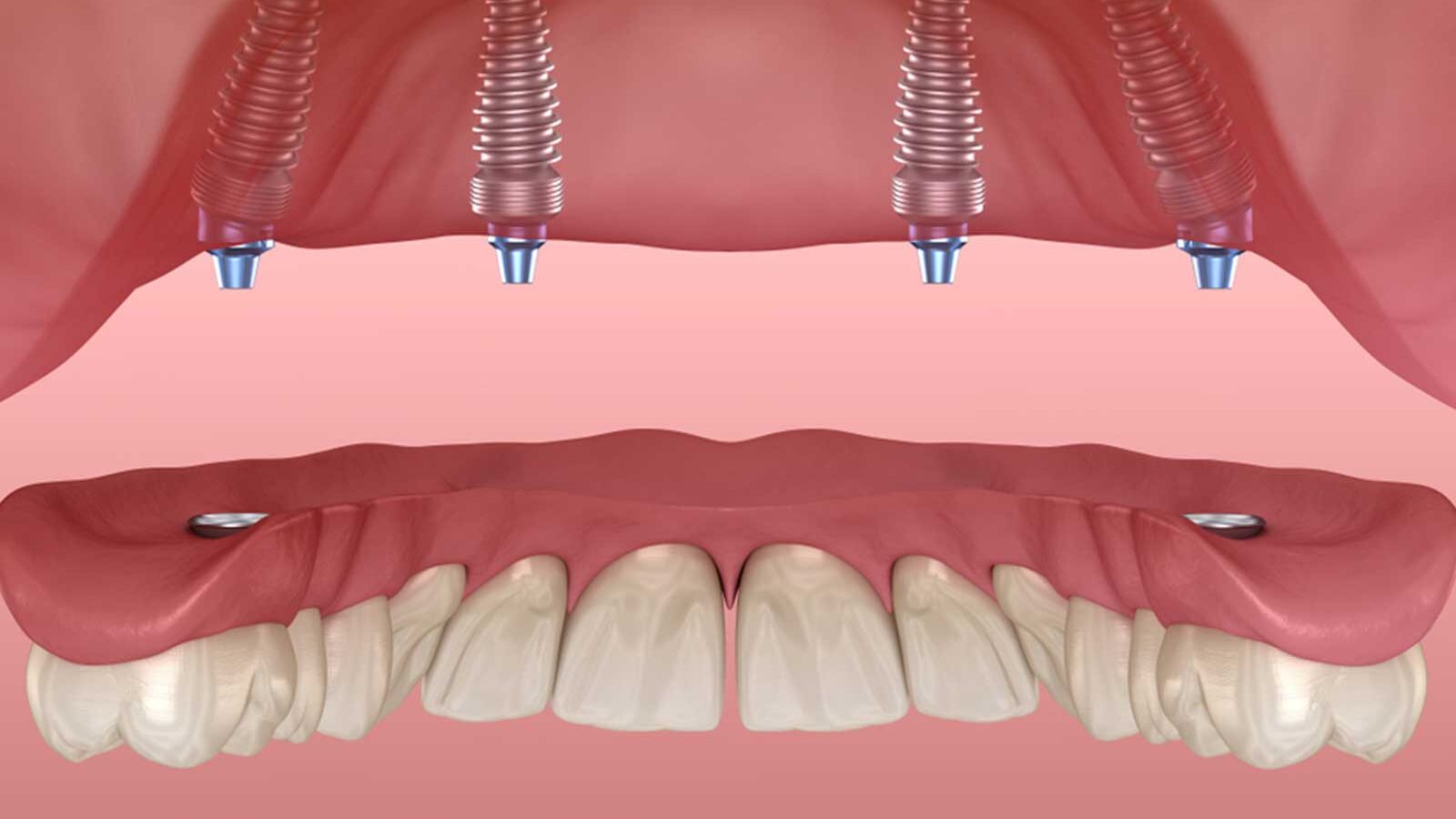
A fixed full-arch bridge on four or six implants, often with temporary teeth fitted on the day of surgery.
What are All-on-4 and All-on-6?
All-on-4 and All-on-6 replace all of the teeth in the upper or lower jaw with a fixed bridge that screws onto implants. The bridge stays in at night, and it does not rest on the gums like a denture. Many patients who need a full-arch rehabilitation choose these techniques because they give fixed, natural-looking teeth in a relatively short time.
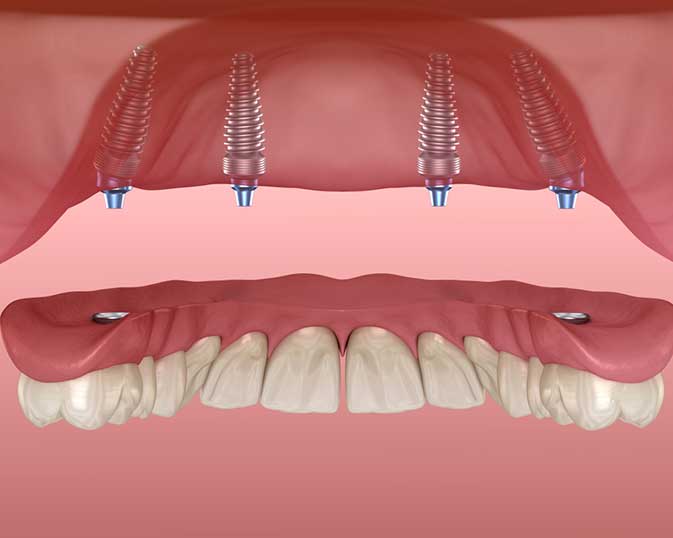
The All-on-4 treatment concept, developed with Nobel Biocare, uses only four implants. Two straight implants sit at the front, while two implants at the back tilt at up to 45 degrees. Because the back implants tilt, they can use the bone that is available and avoid the sinus in the upper jaw and the nerve in the lower jaw. As a result, All-on-4 often avoids the need for bone grafting.
All-on-6 uses six implants to hold a fixed bridge of up to 14 teeth. With more implants, the biting load spreads across more points of support, so the bridge relies less on any single implant. In my experience, All-on-6 can be biomechanically stronger and simpler to maintain. I often prefer it when severe gum disease has weakened the bone.
All-on-4 or All-on-6: which is right for me?
| All-on-4 | All-on-6 | |
|---|---|---|
| Number of implants | Four, with the back two tilted | Six |
| Typical bone situation | Limited bone at the back of the jaw | More bone available along the arch |
| Bone grafting | Often avoided | Sometimes needed |
| Load distribution | Four points of support | Six points of support |
| Same-day temporary bridge | Usually possible | Usually possible |
The choice depends on the amount and quality of bone, the shape of the jaw, the opposing teeth and your general health. I make the decision from your CBCT scan, not from a template.
Who is a good candidate for full-arch implants?
I usually consider All-on-4 and All-on-6 for adults who:
- have lost most or all of their teeth in one or both jaws
- have teeth that are failing because of advanced gum disease, decay or repeated infections
- wear a full denture that is loose, uncomfortable or affects eating and speaking
- are in reasonable general health and willing to clean the bridge carefully every day
However, smoking, uncontrolled diabetes, heavy teeth grinding and some bone medicines increase the risk of complications. For that reason, I discuss them openly with you at the consultation.
How does Dr Eric Battista plan teeth in a day?
I plan full-arch treatment backwards from the final smile. First, I take a CBCT scan, intraoral scans, photographs and records of your bite. Then I design the future teeth and position the implants in planning software, so the screw access holes and the bridge sit correctly. For many full-arch cases I transfer that plan with guided implant surgery and a printed guide, or with X-Guide navigation.
I use Nobel Biocare implants and components for full-arch work. In addition, the dental laboratory and I usually prepare the temporary bridge in advance, so that I can adapt and fit it on the day of surgery.
What happens on the day of surgery?
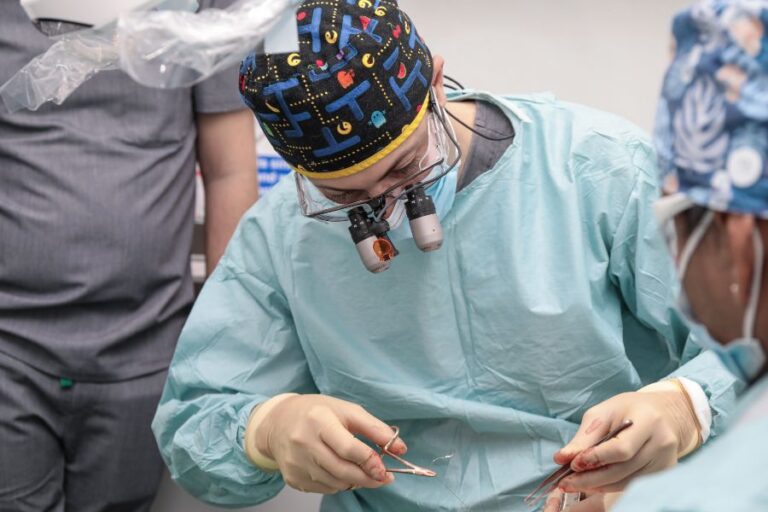
I carry out the treatment under local anaesthetic. EB Dental also offers sedation, which many full-arch patients choose. First, I remove any remaining teeth and smooth the bone where needed. Then I place the implants, often as immediate implants into the extraction sites. During surgery I check how firm they are. If they are firm enough, I attach a fixed temporary bridge later the same day. If not, you wear a temporary denture while the implants heal.
What is recovery like after All-on-4 or All-on-6?
Swelling and bruising are more noticeable than after a single implant, and they usually peak around the second or third day. Most people need a few days off work. A soft diet is essential for the first two to three months, because the implants are still integrating under the temporary bridge. After that period, the laboratory makes the final bridge, usually in a stronger material, and I fit it once the gums have settled.
Long-term care matters as much as the surgery. I will show you how to clean under the bridge with interdental brushes or a water flosser, and you will need regular reviews with a hygienist. If you grind your teeth, I may also recommend a night guard.
What are the risks and alternatives?
Possible complications include pain, swelling, bleeding and infection, and the failure of one or more implants to integrate. Some patients notice temporary or, rarely, permanent numbness of the lip or chin. Other risks include sinus problems in the upper jaw, fracture or wear of the bridge, and a period of adaptation for speech. Over the long term, peri-implantitis, an inflammation around implants, can cause bone loss if cleaning slips.
Alternatives include a removable denture held on two to four implants (an implant-retained overdenture), a conventional full denture, or individual implants and bridges where enough bone exists. The NHS guide to dentures explains the denture options. When the upper jaw has very little bone, I refer some patients for zygomatic implants, which anchor in the cheekbone.
Why choose a specialist in oral surgery?
Full-arch surgery combines multiple extractions, bone management and precise implant positioning in a single session. My training in oral surgery and my years in NHS hospital departments relate directly to that kind of procedure. To discuss whether All-on-4 suits you, book a consultation at EB Dental in Worcester Park or Kentish Town. You can also read more about my training.
Frequently asked questions
Do I really get teeth in a day?
In suitable cases, yes. A fixed temporary bridge is usually attached on the day of surgery or very soon after, as long as the implants are firm enough when they are placed. That bridge is a provisional one: the final bridge is made a few months later, once the implants have integrated and the gums have settled.
How long do All-on-4 implants last?
With careful daily cleaning, regular hygienist visits and reviews, full-arch implant bridges can last for many years. The implants themselves are designed to be long term, while the bridge may need repairs or replacement over time due to normal wear. Smoking, gum disease and grinding increase the risk of problems.
Is All-on-4 better than dentures?
For many people a fixed bridge feels more secure than a denture, does not cover the roof of the mouth and makes chewing easier. It does involve surgery, a recovery period and ongoing maintenance. A well-made denture, or a denture clipped onto implants, can still be the right choice for some patients, and the options are discussed at consultation.
Can I have All-on-4 if I have bone loss?
Often, yes. All-on-4 was designed partly for patients with reduced bone at the back of the jaw: tilting the rear implants allows them to use the bone that remains and avoid the sinus or the nerve, which often avoids grafting. A CBCT scan shows whether there is enough bone at the front of the jaw to support the implants.
What can I eat after full-arch implant surgery?
For the first few days, keep to liquids and very soft foods that need no chewing. For the following weeks, usually around two to three months, stick to a soft diet such as pasta, fish, eggs and well-cooked vegetables, and avoid hard, crunchy or chewy foods. Your surgeon will tell you when you can return to a normal diet.
Related treatments
All treatments Dental implants
A fixed, natural-looking replacement for one tooth, several teeth or a full arch, planned in 3D from a CBCT scan. Read more
Dental implants
A fixed, natural-looking replacement for one tooth, several teeth or a full arch, planned in 3D from a CBCT scan. Read more
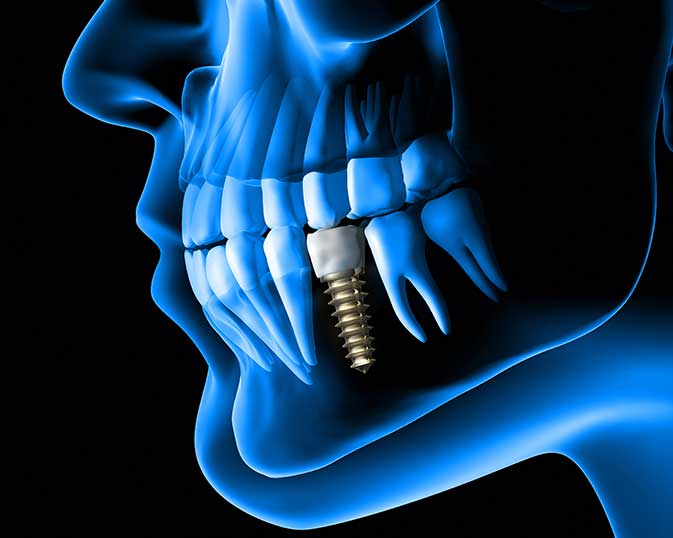 Immediate implants
Removing a failing tooth and placing the implant in the same appointment, often with a temporary tooth on the day. Read more
Immediate implants
Removing a failing tooth and placing the implant in the same appointment, often with a temporary tooth on the day. Read more
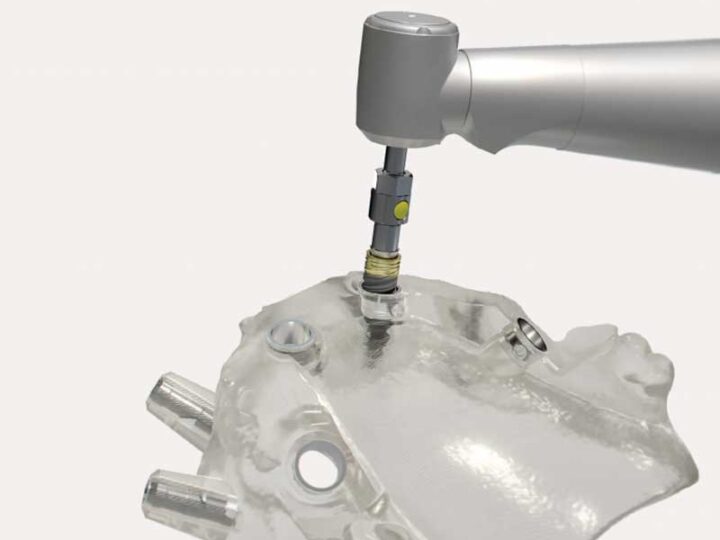 Guided implant surgery
Implants planned in 3D and placed through a custom-made guide for accurate position, angle and depth. Read more
Guided implant surgery
Implants planned in 3D and placed through a custom-made guide for accurate position, angle and depth. Read more
Next step
Talk it through before you decide
Send me a short message about what is going on. You will get an honest answer on whether surgery is the right step, and what the options are.