

Implant surgery
Bone grafting and guided bone regeneration
Rebuilding lost jawbone with grafts and membranes so implants can be placed securely and in the right position.
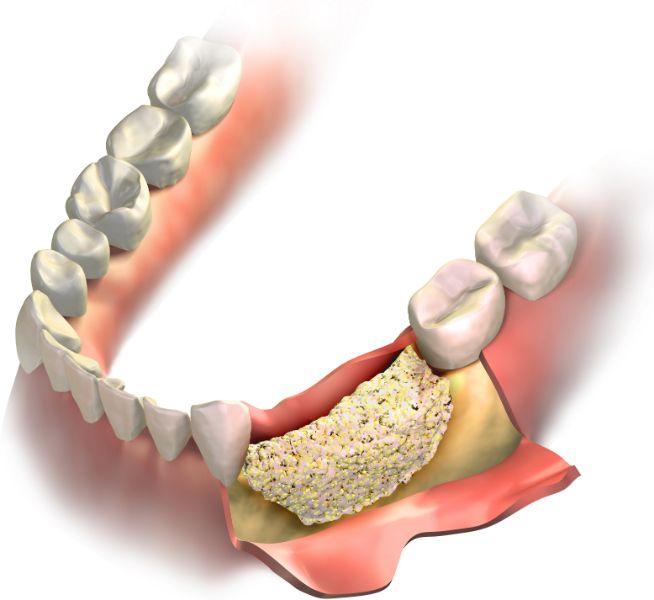
What is dental bone grafting?
Dental bone grafting adds bone, or a bone substitute, to the jaw where you have lost bone. The graft acts as a scaffold. Over the following months, your body replaces it, partly or completely, with new bone. The rebuilt area can then hold a dental implant securely, in a position that supports a natural-looking tooth.
Guided bone regeneration (GBR) is the grafting technique that implant dentists use most often. It rebuilds the alveolar ridge, the part of the jaw that holds the teeth, with the help of membranes. I cover the graft material with a barrier membrane that keeps the faster-growing gum tissue out. As a result, the slower-growing bone has time and space to fill the area.
When do you need a bone graft?
You may need GBR when there is not enough bone for an implant. It also helps when extra bone would let me place the implant in a better position for appearance or function. You may have lost bone because of:
- shrinkage after a tooth extraction, which is greatest in the first months
- gum disease (periodontitis) or long-standing infection
- injury to the teeth or jaw
- cysts in the jaw
- long-term denture wear, which can gradually flatten the ridge
- teeth that never developed
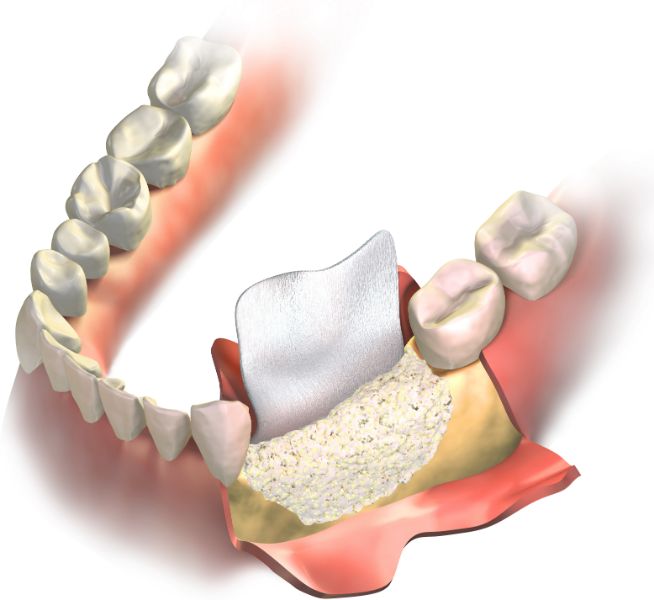
Staged or simultaneous grafting: what is the difference?
I can carry out GBR before implant placement, which surgeons call a staged approach. I choose this when there is not enough bone to hold the implant firmly, because the outcome would otherwise be less predictable. Alternatively, I can graft at the same time as the implant, known as a combined or simultaneous approach. This works when the implant is stable but bone does not cover part of its surface.
GBR can increase both the width of the ridge (horizontal augmentation) and its height (vertical augmentation). However, vertical gains are more demanding. After an extraction, socket preservation, also called ridge preservation, places graft material in the empty socket. This limits shrinkage and keeps the site ready for an implant later.
Which materials can a bone graft use?
| Material | Source | Notes |
|---|---|---|
| Autograft | Your own bone, usually from inside the mouth | Contains living cells; needs a second site to collect it |
| Xenograft | Processed animal bone, usually bovine | Widely used scaffold that resorbs slowly and keeps volume |
| Allograft | Processed human donor bone from tissue banks | Avoids a second surgical site |
| Synthetic | Laboratory-made minerals | An option for patients who prefer no animal or donor material |
Membranes may be resorbable, usually collagen that the body absorbs, or non-resorbable. For larger reconstructions, I sometimes use titanium-reinforced membranes and remove them at a second stage. I often combine materials, for example your own bone mixed with a xenograft. If you have dietary, religious or personal preferences about animal-derived or donor materials, please mention them at consultation.
Can bone grafting help natural teeth?
Yes. Guided tissue regeneration (GTR) applies the same principle to natural teeth affected by gum disease. I place graft material and a membrane in a bony defect around the root, so the supporting tissues can regenerate. GTR forms part of the periodontal treatment on the gum surgery page. The NHS page on gum disease explains the condition itself.
How does Dr Eric Battista plan bone grafting?
First, I measure the bone on a CBCT scan and plan the final implant position digitally. That shows exactly where bone is missing, how much the site needs and whether I can combine the graft with the implant. I have also published a case report in the Journal of Osseointegration. It describes grafting with a xenograft after treatment of bilateral cysts in the upper jaw. Grafting also often goes together with a sinus lift or immediate implants.
What happens on the day?
I carry out bone grafting under local anaesthetic, and EB Dental also offers sedation. First, I open the gum to expose the bone. Then I shape the graft material into the defect, place a membrane over it and fix it if needed. Finally, I close the gum with stitches and without tension, which is one of the most important steps for healing. If the graft needs your own bone, I usually collect it nearby, from behind the last lower tooth or from the implant site itself.
How long does a bone graft take to heal?
Swelling and discomfort are common for three to five days. Painkillers, cold compresses and, where I prescribe them, antibiotics and mouthwash help to manage them. I usually remove stitches after ten to fourteen days. A denture should not press on the grafted area, so it may need adjusting. When I stage the grafting, the new bone usually needs around four to nine months to mature before the implant goes in. The exact time depends on the size of the graft and the materials.
What are the risks and alternatives?
Possible complications include swelling, bruising, bleeding and infection. The membrane can also show through the gum, which may need treatment or early removal. Sometimes part of the graft fails, and a further graft becomes necessary. If I collect your own bone, that site can feel sore. In the lower jaw, temporary or rarely permanent numbness can occur. Smoking significantly increases the risk of graft failure.
Alternatives can include shorter or narrower implants, tilted implants such as All-on-4 in full-arch cases, or a bridge or denture without implants.
Why choose a specialist in oral surgery for bone grafting?
Bone grafting is technique-sensitive. Handling of the gum, stability of the graft and tension-free closure all affect the result. As a specialist in oral surgery with a hospital background, I perform grafting routinely as part of implant treatment. Book a consultation at EB Dental to discuss your options, or ask your dentist to refer you.
Frequently asked questions
Is a dental bone graft painful?
The procedure is carried out under local anaesthetic, so it should not be painful. Afterwards most people have moderate discomfort and swelling for a few days, managed with standard painkillers. When your own bone is collected from a second site, that area may also be sore for a few days. Sedation is available at EB Dental for anxious patients.
How long after a bone graft can I have an implant?
When the graft is placed on its own, the implant usually follows after about four to nine months, once the new bone has matured. Small grafts and socket preservation tend to heal faster, larger reconstructions more slowly. In many cases the graft and implant can be placed in the same procedure, which avoids a second surgery.
Where does the bone for a graft come from?
Grafts can use your own bone, usually collected from inside the mouth; processed animal bone, most often bovine; processed human donor bone; or synthetic materials. Many grafts combine more than one type. Your surgeon will recommend a material based on the size and shape of the defect and on any preferences you have.
Do I always need a bone graft for an implant?
No. Many patients have enough bone for an implant without grafting. A CBCT scan shows whether bone is sufficient. Where bone is limited, alternatives such as shorter implants or angled implants can sometimes avoid a graft, but when the implant would otherwise be in the wrong position, grafting is usually the more predictable choice.
What is socket preservation?
Socket preservation, also called ridge preservation, is a graft placed in the socket immediately after a tooth is removed. It helps to limit the natural shrinkage of the bone and gum that follows an extraction, making a later implant simpler and helping to maintain the shape of the gum, especially at the front of the mouth.
Next step
Talk it through before you decide
Send me a short message about what is going on. You will get an honest answer on whether surgery is the right step, and what the options are.