

Digital planning
Digital dentistry
CBCT scans, intraoral scanning and 3D planning software used to plan implants and oral surgery before the first incision.
What is digital dentistry?
Digital dentistry is the use of digital imaging, scanning and computer software to diagnose, plan and carry out treatment. For implant and oral surgery, it means I can study your jaw in three dimensions, decide the ideal position of an implant on screen, and then transfer that plan to the operation with a printed guide or a navigation system.
Digital dentistry has changed the experience for patients too. Appointments can be shorter, impressions no longer need trays of putty, and you can see your own scan and plan on screen while we discuss the options.
What does a CBCT scan add to digital dentistry?
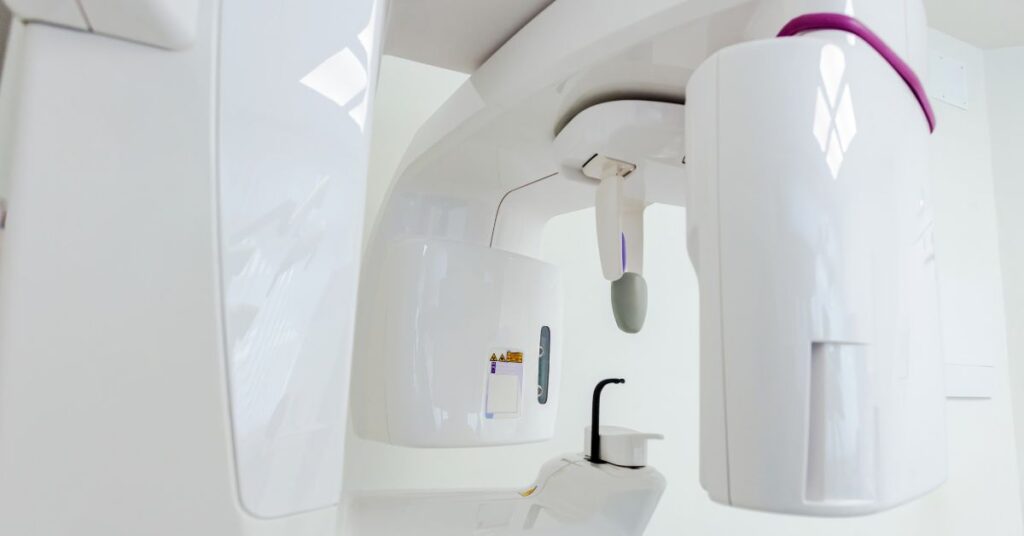
Cone beam computed tomography (CBCT) is a 3D X-ray scan of the jaws and teeth. Standard dental X-rays are flat images; a CBCT shows the bone in every direction, including its height, width and density, and the exact position of structures such as the nerves, the sinuses and the roots of nearby teeth.
I use CBCT when the extra detail will change a clinical decision, for example:
- planning dental implants and assessing whether there is enough bone
- checking how close a lower wisdom tooth sits to the nerve before wisdom tooth removal
- locating an impacted canine and the roots around it
- assessing the sinus floor and bone height before a sinus lift
A CBCT involves a higher radiation dose than a single dental X-ray, though usually lower than a medical CT scan. In the UK, every X-ray needs a clear clinical reason. So I only take a CBCT when its benefit outweighs the small risk, and I keep the scan area as small as possible.
What is an intraoral scan?
An intraoral scanner is a small handheld camera that records the teeth and gums as a precise 3D digital model. It replaces traditional impressions taken with trays of putty. The advantages patients notice are:
- Precise. The digital model captures fine detail, and I can check it on screen immediately.
- Comfortable. There is no tray to bite into and no messy material, which helps anyone with a strong gag reflex.
- Faster. The clinic sends the scan to the laboratory digitally, without waiting for a physical model.
Then I match the scan of the teeth with the CBCT. This shows the surface of the gums and teeth together with the bone beneath.
What happens at a digital planning appointment?
A planning appointment usually combines a clinical examination with the scans needed for your case. The intraoral scan takes a few minutes while you sit in the dental chair. A CBCT scan is quick: you stand or sit still while the machine rotates around your head, usually for less than a minute. I then review the images, often with you at the screen, before preparing the detailed plan. When the plan is ready, we go through it together, including the implant positions, any grafting and the expected timeline of treatment.
How does 3D surgical planning work?
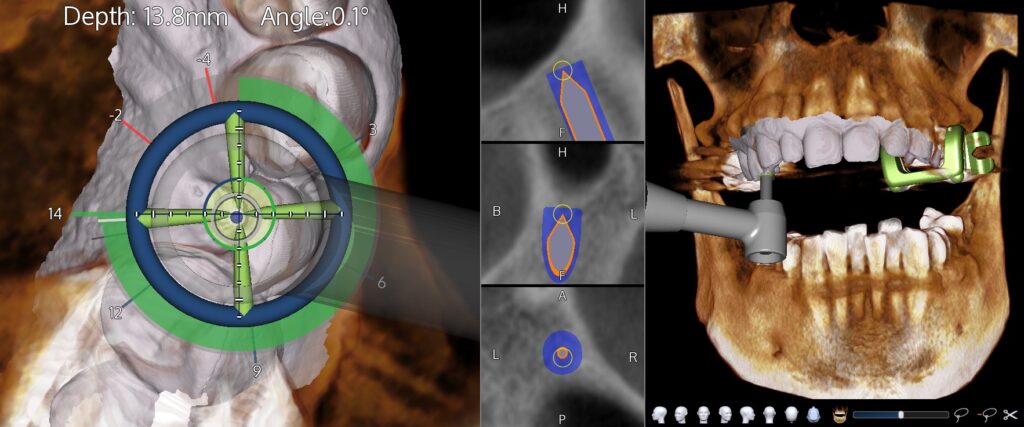
With the CBCT and intraoral scan combined, I plan the surgery in specialist software. For implants, planning starts from the final tooth. First I design the position of the future crown or bridge. Then I position the implant in the bone to support it. Surgeons call this prosthetically driven planning. Before the day of surgery, I can measure the bone and check the distance to the nerve or sinus. I can also choose the implant size and decide whether you need grafting.
| Software | How I use it |
|---|---|
| DTX Studio | Implant planning with Nobel Biocare implants and planning for navigated surgery. |
| 3Shape Implant Studio | Implant planning and surgical guide design from scan data. |
| coDiagnostiX | 3D implant planning and guide design. |
| SICAT | 3D analysis of CBCT data for implant and surgical planning. |
| Meshmixer | Preparing and refining 3D models and guide files. |
I have presented on the use of DTX Studio in oral and implant surgery. Also, my published research used DTX Studio planning with X-Guide navigation for immediate implants in the front of the upper jaw.
How do I use the digital plan during surgery?
There are two main ways to transfer the plan to the mouth. In guided implant surgery, a 3D printer produces a surgical guide from the plan. The guide fits over the teeth or gum and directs the drill to the planned position, angle and depth. I belong to the Nobel Biocare team of specialists for fully guided implant surgery.
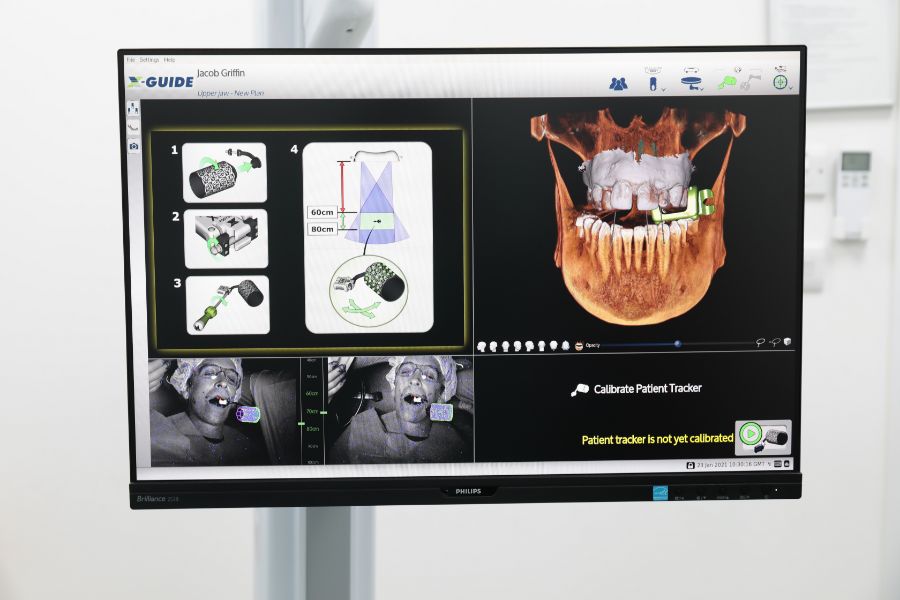
In navigated implant surgery, the X-Guide system tracks the drill in real time against the plan on a screen, rather like satellite navigation. I was among the first oral surgeons in the UK to train on X-Guide.
Are there limits to digital dentistry?
Digital planning improves accuracy and predictability, but it does not remove all risk. Small deviations between the plan and the final position can still occur, and the surgeon’s judgement during the operation remains essential. Digital tools support clinical experience; they do not replace it.
Digital dentistry in London
I use digital dentistry for patients at EB Dental in Worcester Park and Kentish Town. Dentists can share scans and X-rays when referring through the referral page.
Frequently asked questions
Is a CBCT scan safe?
A CBCT uses X-rays, so it involves a small radiation dose, higher than a single dental X-ray but usually lower than a medical CT scan. In the UK every scan must be clinically justified, so a CBCT is only taken when the information will help your treatment, and the scanned area is kept as small as possible.
Do I need a CBCT scan before dental implants?
In most cases, yes. A CBCT shows the height, width and quality of the bone and the position of the nerves and sinuses, which a standard X-ray cannot show in three dimensions. Your surgeon uses it to choose the implant size and position and to decide whether bone grafting is needed.
What is the difference between an intraoral scan and a traditional impression?
A traditional impression uses a tray of putty that sets in the mouth. An intraoral scan uses a small camera to record a precise 3D digital model of the teeth and gums. Scanning is usually more comfortable, avoids messy materials and can be sent to the laboratory digitally.
Does digital planning make implant surgery more accurate?
Digital planning allows the surgeon to choose the implant position in relation to the final tooth, the bone and nearby structures before surgery. Transferred with a surgical guide or a navigation system, it generally improves accuracy compared with freehand placement. Small deviations can still occur, so clinical judgement remains essential.
Can I see my treatment plan before surgery?
Yes. One of the benefits of 3D planning is that the scan and the planned implant positions can be shown on screen during your consultation. Seeing the plan helps many patients understand why a particular approach, such as grafting or guided surgery, is being recommended.
Next step
Talk it through before you decide
Send me a short message about what is going on. You will get an honest answer on whether surgery is the right step, and what the options are.