

Digital implant surgery
X-Guide navigated implant surgery
Real-time 3D navigation that guides every movement of the drill, like a GPS for implant placement.
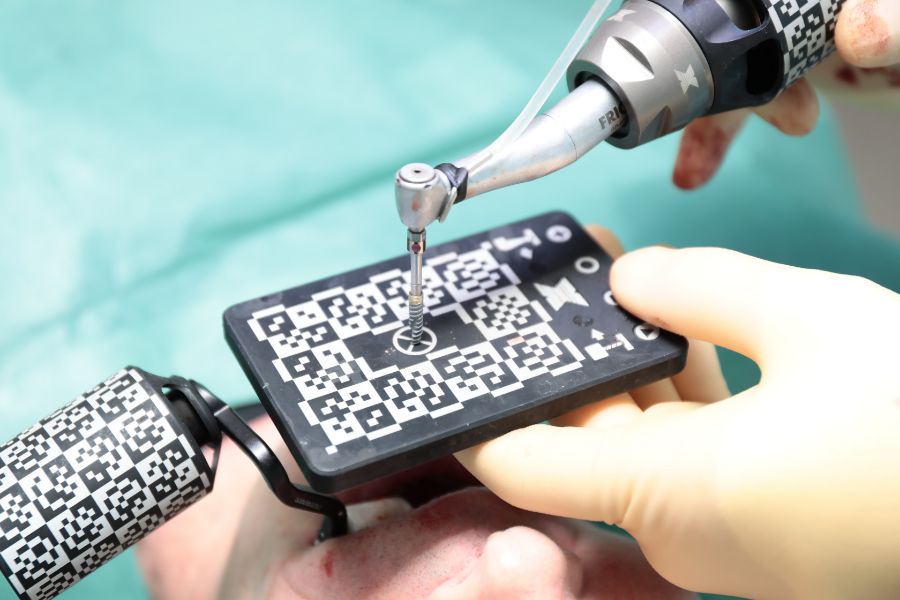
What is X-Guide navigated implant surgery?
Navigated implant surgery uses a dynamic navigation system, X-Guide, to place dental implants. Instead of a physical template, it relies on optical tracking. As a result, the screen shows me in real time exactly where the drill sits in relation to the planned implant and your anatomy. People often describe it as a GPS for drills and implants, because turn-by-turn guidance helps refine every movement of the handpiece.
First, I plan the implant in software from a CBCT scan. Then, during surgery, the screen shows where the drill is while I prepare the site, and where the implant is as I place it. In this way, the whole route follows the plan.
How does dynamic navigation work?
- Scan and plan. I use a CBCT scan and a digital impression to plan the position, angle and depth of each implant.
- Registration. I attach a small tracking device to the teeth or jaw. The system then matches the scan to you, so it knows exactly where the jaw is.
- Tracking. Cameras follow markers on the handpiece and on the patient continuously, so the system compensates for head movements.
- Navigation. The screen displays the drill tip, its angle and its depth against the plan, and I adjust until they match.
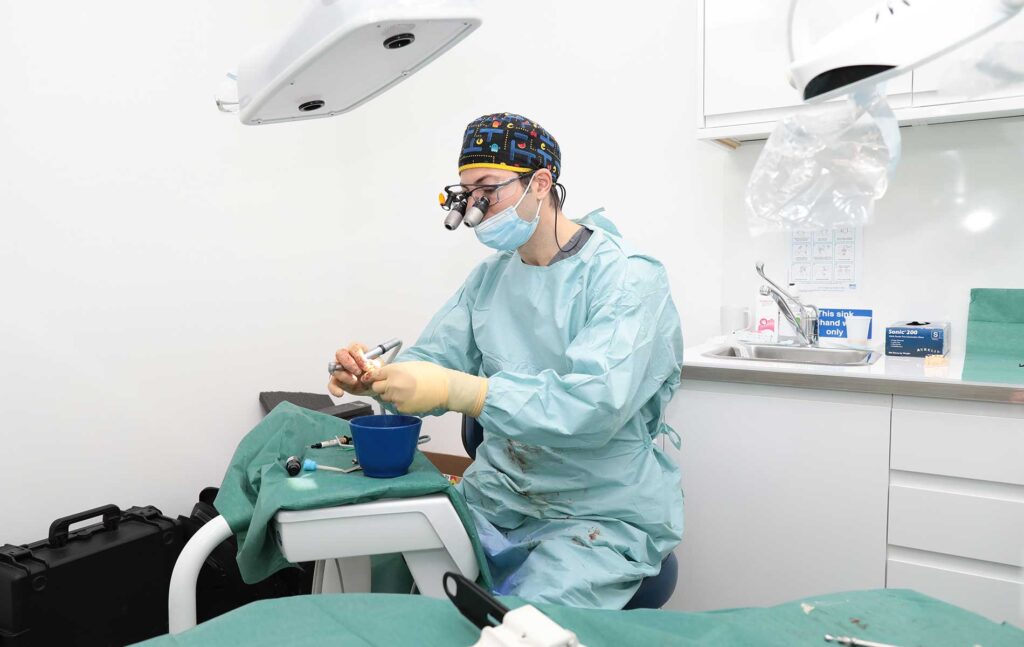
What are the advantages of navigated implant surgery?
- Accuracy. I check the drill against the plan throughout, not only at the start.
- Flexibility. I can adjust the plan during surgery if the bone looks different from the scan.
- Same-day surgery. Because there is no laboratory guide to wait for, surgery can often follow the scan soon after.
- Access. You need less mouth opening than with a printed guide, which helps with back teeth.
- Visibility. The surgical field stays open, so I keep direct sight and good cooling of the bone.
What did Dr Battista’s research on X-Guide find?
I was among the first oral surgeons in the UK to train on the X-Guide dynamic navigation system. I also studied it during my specialist training at the University of Naples Federico II. The study appeared as Battista E., Gasparro R., Cacciola M., Sammartino G., Marenzi G., “Dynamic Navigation System for Immediate Implant Placement in the Maxillary Aesthetic Region”, Applied Sciences 2022; 12(11):5510, doi:10.3390/app12115510.
This proof-of-concept study followed twelve consecutive patients who needed at least one immediate implant in the upper front of the mouth. The team planned the implants in DTX Studio Implant software and placed them with X-Guide navigation. To measure accuracy, the authors compared the planned position with the real position on a CBCT scan after surgery.
| Measurement | Average deviation from plan |
|---|---|
| At the implant shoulder (entry point) | 0.77 mm (± 0.25) |
| At the implant tip (apex) | 1.2 mm (± 0.61) |
| Depth | 0.5 mm (± 0.21) |
| Angle | 2.5 degrees (± 0.41) |
Over an average follow-up of six months, the study recorded no biological complications, implant failures or prosthetic failures. However, it was a small study with short follow-up. Within those limits, the results suggest that dynamic navigation is accurate for prosthetically driven implant placement in the aesthetic zone. In other words, it positions the implant to support the planned crown. You can find more about my publications on the research and teaching page.
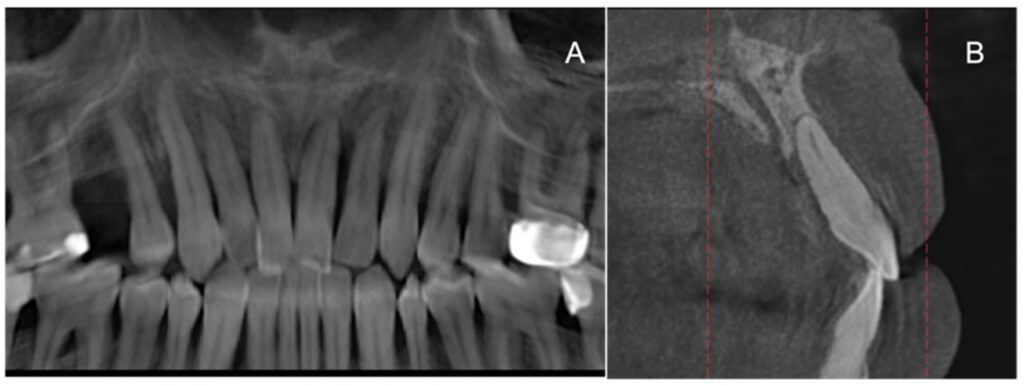
Who is suitable for navigated implant surgery?
I can use navigation for most implant cases, from a single tooth to several implants. It is particularly useful for immediate implants at the front of the mouth, where small differences in position affect the gum and crown. It also helps with back teeth when you cannot open your mouth widely, and when surgery needs to happen soon after the scan. For some full-arch cases, however, a printed guide remains the better choice, as the guided implant surgery page explains.
What happens on the day?
I carry out navigated implant surgery under local anaesthetic, and EB Dental also offers sedation. First, I attach and calibrate the tracking device, which adds a few minutes at the start. Then I prepare the implant site while I follow the navigation screen, and I place the implant. Depending on its stability, I fit a healing cap or a temporary tooth.
What is recovery like?
Recovery depends on the procedure rather than on the navigation itself. After a single implant, most people have mild soreness and swelling for a few days. Integration usually takes around three to six months, and then the laboratory makes the final crown.
Are there risks with navigated implant surgery?
Navigation improves control, but the general risks of implant surgery remain: pain, swelling, bleeding, infection, nerve or sinus involvement and implant failure. Accuracy also depends on correct registration and calibration. In addition, the technique has a learning curve, so training and experience with the system matter. If the tracking is not reliable on the day, I can continue the surgery conventionally.
Why choose Dr Eric Battista for navigated surgery?
I have used dynamic navigation clinically and studied its accuracy in published research. I also combine it with specialist training in oral surgery. To find out whether X-Guide suits you, book a consultation at EB Dental. Dentists can also refer a patient directly.
Frequently asked questions
What is the difference between X-Guide and a surgical guide?
A surgical guide is a physical template made in advance, with sleeves that direct the drill. X-Guide uses cameras and tracking markers to show the drill position on a screen in real time. Navigation needs no laboratory-made guide, allows the plan to be adjusted during surgery and needs less mouth opening, while a printed guide can be very efficient for full-arch work.
How accurate is X-Guide?
In Dr Battista's published study of twelve patients receiving immediate implants in the upper front of the mouth, average deviation from the plan was 0.77 mm at the implant entry point, 1.2 mm at the tip and 2.5 degrees in angle. These figures come from a small proof-of-concept study, and accuracy in any case also depends on registration and the surgeon's experience.
Can I have implant surgery on the same day as my scan with X-Guide?
Often, yes. Because no guide has to be manufactured, surgery can take place soon after the CBCT scan and planning, sometimes on the same day. Whether that is appropriate depends on your medical history, the complexity of the case and whether any other treatment is needed first.
Is navigated implant surgery more painful?
No. The navigation system only changes how the drill is guided, and the surgery is carried out under local anaesthetic in the same way as other implant procedures. The tracking device attached to the teeth can feel slightly bulky but is not painful. Recovery depends on the procedure itself, not on the navigation.
Related treatments
All treatments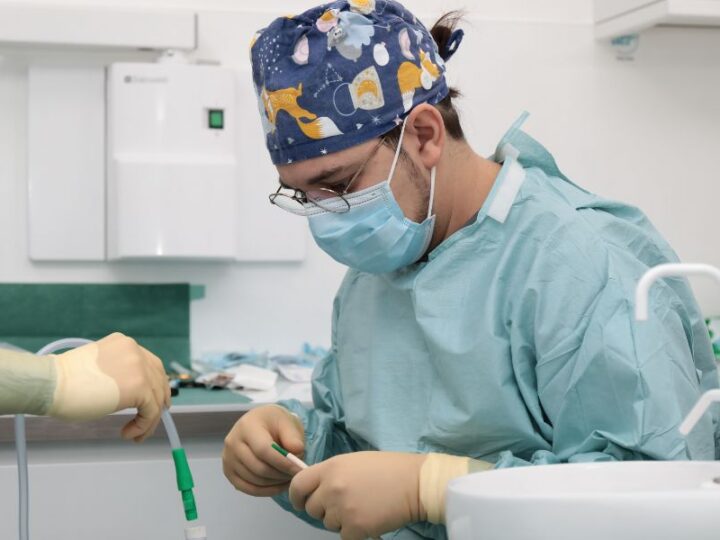 Dental implants
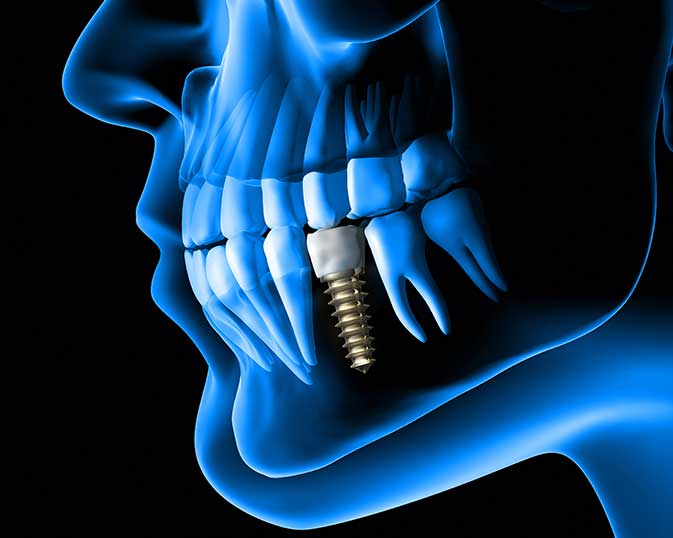
A fixed, natural-looking replacement for one tooth, several teeth or a full arch, planned in 3D from a CBCT scan. Read more
Dental implants
A fixed, natural-looking replacement for one tooth, several teeth or a full arch, planned in 3D from a CBCT scan. Read more
 Immediate implants
Removing a failing tooth and placing the implant in the same appointment, often with a temporary tooth on the day. Read more
Immediate implants
Removing a failing tooth and placing the implant in the same appointment, often with a temporary tooth on the day. Read more
 All-on-4 and All-on-6
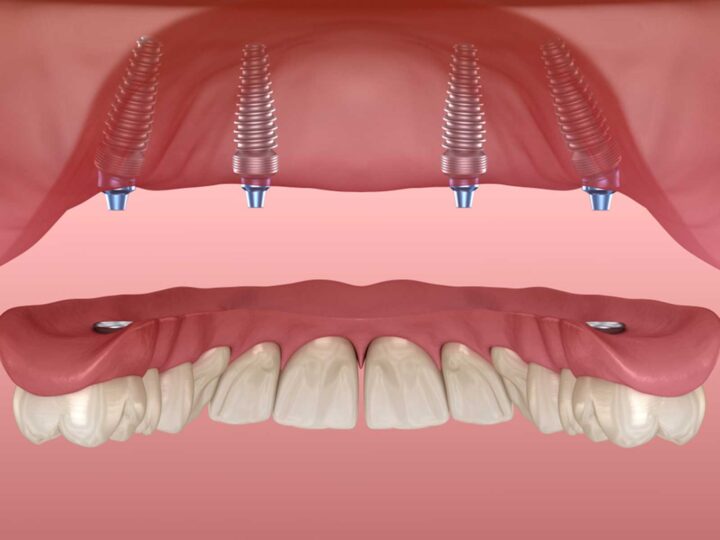
A fixed full-arch bridge on four or six implants, often with temporary teeth fitted on the day of surgery. Read more
All-on-4 and All-on-6
A fixed full-arch bridge on four or six implants, often with temporary teeth fitted on the day of surgery. Read more
Next step
Talk it through before you decide
Send me a short message about what is going on. You will get an honest answer on whether surgery is the right step, and what the options are.