

 Oral surgery Wisdom teeth removal recovery: a day-by-day guide
What to expect each day after wisdom tooth surgery, how to look after the sockets and when to call your surgeon.
Oral surgery Wisdom teeth removal recovery: a day-by-day guide
What to expect each day after wisdom tooth surgery, how to look after the sockets and when to call your surgeon.
Oral surgery
Dry socket: how to prevent it and what to do
What is dry socket?
After an extraction, a blood clot forms in the empty socket. The clot protects the underlying bone and nerve endings and acts as a scaffold for new tissue. Dry socket, known clinically as alveolar osteitis, occurs when that clot breaks down or comes away before healing is under way. Air, food and fluids then reach the bare bone in the socket, which causes a characteristic deep, throbbing pain.
Dry socket is not an infection in the usual sense, although bacteria probably play a part in breaking down the clot. It is a disturbance of normal healing. It is painful but self-limiting and responds well to simple treatment.
How do you know if you have dry socket?
Some discomfort after an extraction is normal, and it usually improves day by day. Dry socket follows a different pattern. Typical features include:
- pain that gets worse instead of better, usually starting two to four days after the extraction
- a deep, throbbing ache that often spreads to the ear, temple or neck on the same side
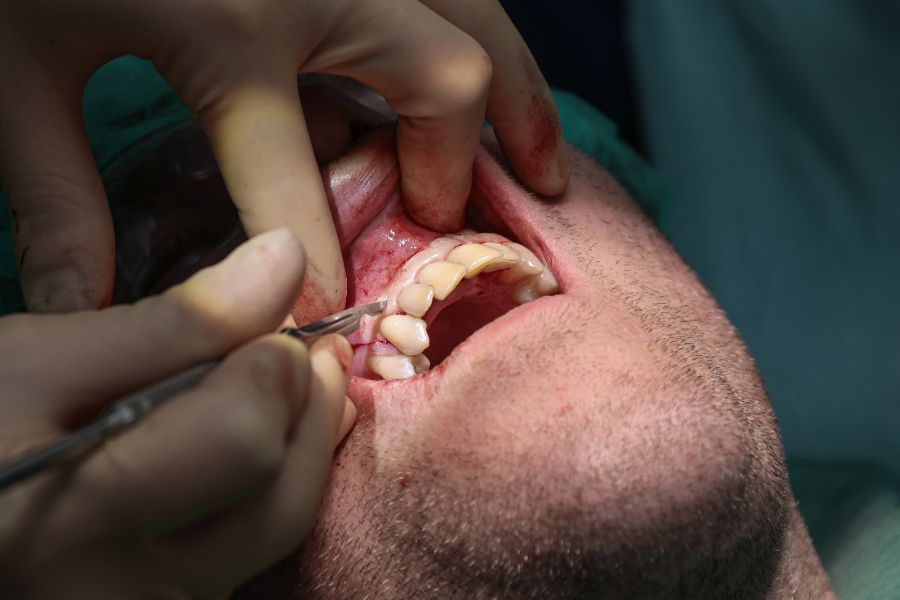
- a socket that looks empty, with greyish or whitish bone visible instead of a dark clot
- an unpleasant taste or bad breath
- pain that usual painkillers only partly relieve
Dry socket does not normally cause a high temperature or spreading swelling. If you have fever, increasing swelling, pus or difficulty swallowing, contact your dentist or surgeon urgently, as these suggest infection rather than dry socket.
How is dry socket different from normal healing?
The table below compares the usual course after an extraction with what typically happens in dry socket.
| Normal healing | Dry socket | |
|---|---|---|
| Pain pattern | Worst in the first day or two, then steadily easing | Eases at first, then worsens from around day two to four |
| Appearance of socket | Dark red clot, later covered by pale healing tissue | Empty-looking socket, exposed bone |
| Spread of pain | Mostly local to the extraction site | Often radiates to the ear or temple |
| Taste and smell | Usually normal after the first day | Unpleasant taste or odour is common |
| Response to painkillers | Usually good | Often only partial |
Who is most at risk of dry socket?
Dry socket can happen after any extraction, but some factors make it more likely:
- Smoking and tobacco use: one of the strongest risk factors, through reduced blood flow and the suction of drawing on a cigarette
- Lower wisdom teeth: surgical removal of lower molars, particularly impacted wisdom teeth, carries a higher risk than simple extractions
- Difficult or traumatic extractions: more bone handling means more risk
- Previous dry socket: people who have had it before are more likely to have it again
- Hormonal factors: some studies link the combined oral contraceptive pill with a higher risk
- Poor oral hygiene and existing infection around the tooth that needs extraction

How can you prevent dry socket?
No measure guarantees that dry socket will not happen, but the following steps reduce the risk significantly:
- Avoid smoking before and after the extraction for as long as possible, ideally at least several days afterwards. If you cannot stop, speak to your dentist about nicotine replacement options that avoid suction.
- Do not rinse or spit for the first 24 hours. Let the clot settle undisturbed.
- Avoid straws and other sucking actions for several days.
- Avoid hot drinks, alcohol and strenuous exercise on the day of surgery.
- Eat soft food and chew on the other side.
- Start gentle salt water rinses from the second day, letting the water fall from the mouth rather than spitting.
- Keep the rest of your mouth clean with careful brushing.
- Do not poke the socket with your tongue, fingers or objects.
Your surgeon may also take steps during the extraction to reduce risk, such as using an antiseptic mouthwash before surgery, handling the bone gently and, in some cases, placing material in the socket. If you take the combined pill, your surgeon may discuss timing of planned extractions.
What should you do if you think you have dry socket?
Contact the dentist or surgeon who removed the tooth. A quick look at the socket usually confirms the diagnosis, and treatment brings relief quickly. Do not try to clean the socket yourself with sharp objects.
While waiting for your appointment, regular painkillers such as paracetamol and ibuprofen, if suitable for you, help control the pain. Gentle warm salt water rinses can keep the area clean. Avoid smoking, which can make the problem worse. If you do not have contact details or cannot reach your clinic, contact your registered dentist or NHS 111 for advice.
What does treatment at the clinic involve?
Treatment aims to relieve pain and protect the socket while it heals. It usually involves:
- gently irrigating the socket with saline or an antiseptic solution to remove food and debris
- placing a soothing medicated dressing in the socket, which often relieves pain within hours
- replacing the dressing at follow-up visits if needed
- advice on pain relief and home care, including rinsing
Most patients do not need antibiotics for dry socket, because it is not primarily an infection. Your clinician may consider them if there are signs of spreading infection, or for patients with particular medical risks. The decision depends on your symptoms and history.
Are lower extractions more at risk than upper ones?
Dry socket is more common after lower extractions, and particularly after surgical removal of lower wisdom teeth. The bone of the lower jaw is denser and has a less generous blood supply than the upper jaw, which may make the clot more fragile. It can still follow upper extractions, but less often. Knowing the extraction site helps the clinician judge the likely cause when pain persists after a few days.
How long does dry socket last?
With treatment, pain usually improves significantly within a day or two. The socket then heals over the following one to two weeks as new tissue gradually covers the exposed bone. Without treatment, the socket still heals eventually, but pain can persist for longer.
The condition does not usually cause long-term problems. If pain persists beyond the expected period, or the socket is not healing, the clinician may take an X-ray to check for a retained fragment of root or bone.
Does vaping or nicotine replacement increase the risk?
Research on vaping and dry socket is more limited than for cigarettes, but nicotine itself narrows blood vessels and reduces blood flow to healing tissues, and the inhaling action creates suction in the mouth. For both reasons, avoiding vaping for as long as possible after an extraction is sensible. Nicotine patches avoid the suction effect and may be a more suitable short-term option for regular users, although nicotine still affects blood flow. Your dentist or surgeon can advise on the most practical approach for you.
Do antibiotics help with prevention?
Clinical guidance does not recommend routine antibiotics simply to prevent dry socket in healthy patients having straightforward extractions. Overuse of antibiotics contributes to antimicrobial resistance and can cause side effects. Some clinicians use antiseptic chlorhexidine rinses before and after extraction, which may help reduce risk in some patients. Your clinician decides about antibiotics individually, based on the extraction, any infection and your medical history.
Can dry socket happen after implant surgery?
Dry socket is a complication of extraction sockets. When your surgeon places an implant into a healed site, dry socket does not occur. With an immediate implant, the surgeon removes the tooth and places the implant in the socket on the same day. The implant and graft material largely fill the socket, so the healing pattern is different. Your surgeon discusses other complications of implant surgery at consultation.
Is professional assessment worthwhile before a difficult extraction?
Some teeth sit deep in the bone, close to the nerve or sinus, or look likely to be difficult. For these, an assessment by an oral surgeon allows careful planning. A CBCT scan can show the root shape and its relationship to important structures. Dr Battista assesses these cases before surgery to choose the least traumatic approach. If an upcoming extraction worries you, you can get in touch.
Frequently asked questions
How soon after an extraction can dry socket start?
Dry socket usually begins two to four days after an extraction. The typical sign is pain that had started to improve and then becomes worse, often spreading to the ear. It is unusual for dry socket to start on the day of surgery or more than a week afterwards. Pain at those times may have another cause and should still be checked.
Can dry socket heal on its own?
Dry socket does heal on its own eventually, as new tissue grows over the exposed bone, but the pain can be severe and last longer without treatment. A dentist or oral surgeon can clean the socket and place a soothing dressing, which often brings relief within hours. Contacting the clinic that removed the tooth is the sensible first step.
Does smoking really cause dry socket?
Smoking is one of the strongest known risk factors. Tobacco reduces blood flow to the healing tissues, chemicals in smoke interfere with clot formation and the suction of drawing on a cigarette can dislodge the clot. Avoiding smoking for as long as possible before and after an extraction is one of the most effective ways to reduce risk.
Do I need antibiotics for dry socket?
Usually not. Dry socket is a disturbance of healing rather than a typical infection, and it responds to cleaning and a medicated dressing. Antibiotics may be prescribed if there are signs of spreading infection, such as fever or increasing swelling, or for patients with specific medical risks. Your clinician will advise based on your situation.
Is it dry socket or just normal pain?
Normal post-extraction pain is worst in the first day or two and then improves steadily. Dry socket pain typically worsens from around day two to four, feels deep and throbbing, may spread to the ear and often comes with a bad taste. If you are unsure, the clinic can check the socket quickly.
More guides
All guides
Oral surgery Wisdom teeth removal recovery: a day-by-day guide
What to expect each day after wisdom tooth surgery, how to look after the sockets and when to call your surgeon.
 Oral surgery When should a GP dentist refer to an oral surgeon?
Clinical triggers for referral, how complexity is assessed and what makes a referral quick and useful for everyone.
Oral surgery When should a GP dentist refer to an oral surgeon?
Clinical triggers for referral, how complexity is assessed and what makes a referral quick and useful for everyone.
 Dental implants How much do dental implants cost in London?
The real factors behind implant pricing in London, and how to compare treatment quotes on a like-for-like basis.
Dental implants How much do dental implants cost in London?
The real factors behind implant pricing in London, and how to compare treatment quotes on a like-for-like basis.
Next step
Talk it through before you decide
Send me a short message about what is going on. You will get an honest answer on whether surgery is the right step, and what the options are.