

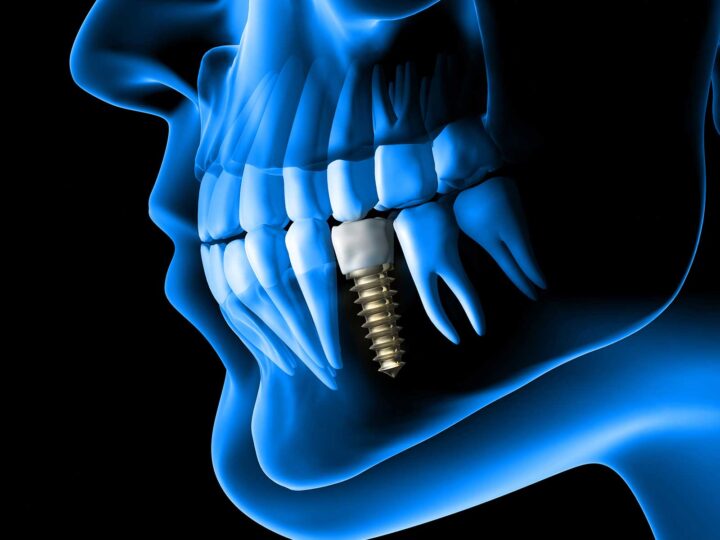
 Dental implants How much do dental implants cost in London?
The real factors behind implant pricing in London, and how to compare treatment quotes on a like-for-like basis.
Dental implants How much do dental implants cost in London?
The real factors behind implant pricing in London, and how to compare treatment quotes on a like-for-like basis.
Dental implants
Same-day teeth (All-on-4): what really happens on the day
What does “same-day teeth” actually mean?
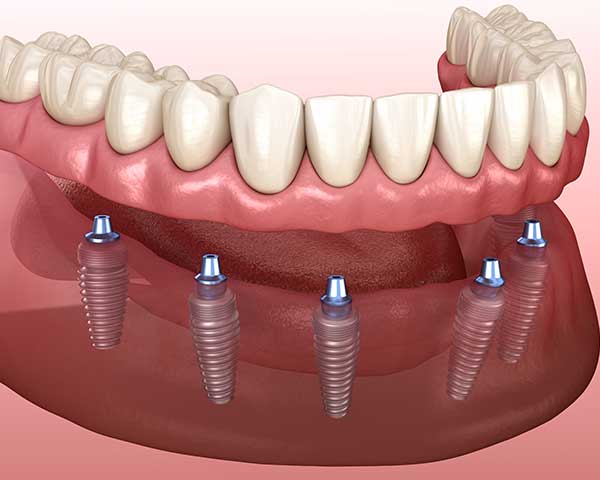
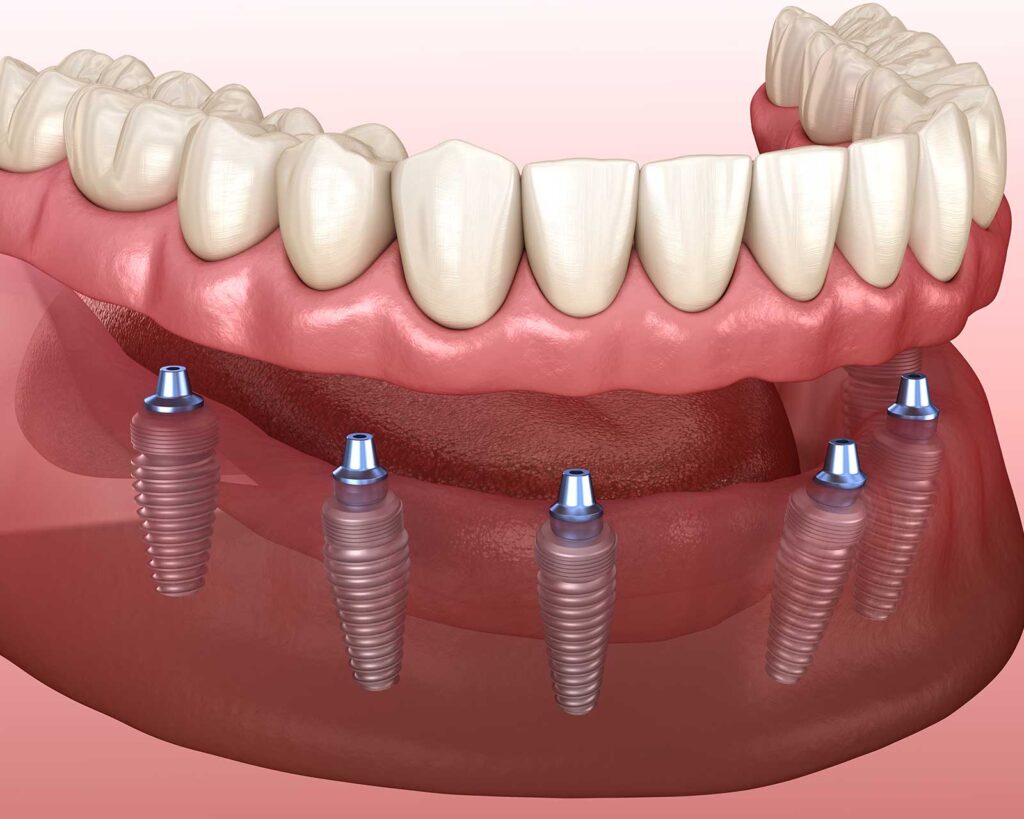
“Same-day teeth”, “teeth in a day” and “All-on-4” describe a treatment that replaces a full arch of teeth with a fixed bridge on four implants, or six in some cases. The phrase “same day” refers to the provisional bridge: a fixed set of temporary teeth attached to the implants on the day of surgery, so the patient does not leave without teeth or with a removable denture.
The provisional bridge is not the final result. After the implants integrate with the bone over several months, a definitive bridge in stronger materials replaces it. Understanding this two-stage process helps set realistic expectations. More detail on the treatment itself is on the All-on-4 and All-on-6 page.
What happens before the day of surgery?
The day itself runs smoothly because most of the work happens beforehand. Planning usually includes:
- a full examination, medical history review and discussion of goals
- a CBCT scan to assess bone volume, the sinuses and the nerves
- intraoral scans, photographs and bite records
- design of the new teeth: shape, length, colour and lip support
- digital planning of the implant positions, often with a surgical guide
- agreement on anaesthesia: local anaesthetic alone or with intravenous sedation
The team usually gives you written instructions covering eating before sedation, medication, transport home and the soft diet afterwards. Arranging for someone to accompany you home is essential if you are having sedation.
What is the timeline on treatment day?
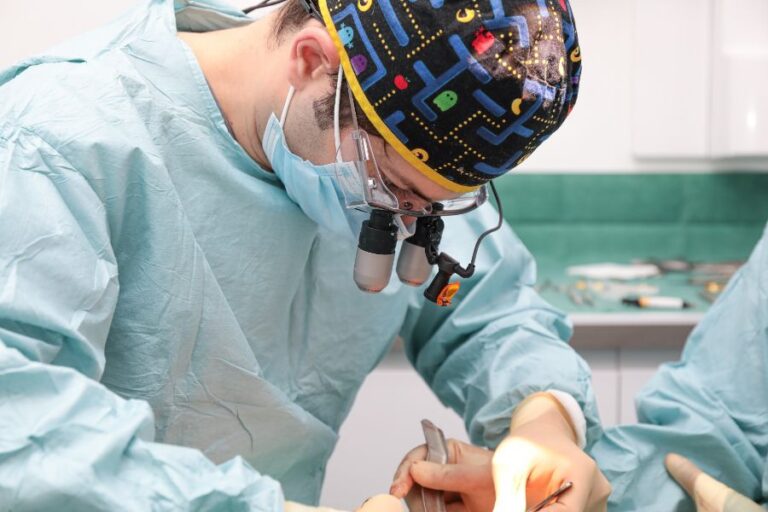
Every case differs, but a typical treatment day follows the sequence below. Timings are approximate and depend on the number of extractions, bone conditions and whether your surgeon treats one or both arches.
| Stage | What happens |
|---|---|
| Arrival and checks | The team confirms your medical history, reviews consent, measures blood pressure and starts sedation if planned |
| Local anaesthetic | Your surgeon numbs the whole arch thoroughly; with sedation, many patients remember little of this |
| Extractions | Your surgeon removes any remaining teeth as gently as possible and cleans infection from the sockets |
| Bone preparation | Your surgeon smooths or levels the ridge where needed to create space for the bridge |
| Implant placement | Your surgeon places four to six implants, often tilting the back ones to avoid the sinus or nerve |
| Abutments and stitches | Connectors go onto the implants, then stitches close the gum |
| Records for the bridge | The team takes scans or impressions to fit the provisional bridge accurately |
| Bridge fitting | The team adjusts the fixed provisional bridge, screws it into place and checks the bite |
Surgery and bridge fitting usually take most of a day. You can often rest between the surgical phase and the bridge fitting while the laboratory completes its work.
Why does your surgeon tilt the back implants?
In the upper jaw, the maxillary sinus often limits the bone available at the back. In the lower jaw, the inferior alveolar nerve runs through the bone behind the premolars. Tilting the back implants lets your surgeon anchor longer implants in the denser bone further forward. Their heads then emerge further back to support more teeth. This technique is one of the reasons full-arch treatment can sometimes avoid a sinus lift or extensive bone grafting.
Whether four implants are enough, or six are preferable, depends on bone quality, the opposing teeth, bite forces and the size of the arch. Your surgeon will explain the reasoning after reviewing the scan.
Is it always possible to fit same-day teeth?
Not always. A fixed provisional bridge needs the implants to be firmly stable in the bone at the time of placement, a property called primary stability. If the bone is very soft, or if stability is lower than planned, attaching a bridge straight away could put the implants at risk. In that situation the surgeon may fit a temporary removable denture instead and attach fixed teeth after initial healing.
Good planning makes same-day teeth achievable in most suitable cases. However, your surgeon makes the final decision during surgery, so it is not a promise beforehand. A careful surgeon will discuss this possibility openly at the planning stage.
Does All-on-4 surgery hurt?
Your surgeon carries out the procedure under thorough local anaesthetic, so you should not feel pain during surgery. Pressure and vibration are normal sensations. Many patients also choose intravenous sedation for full-arch treatment. It makes the experience relaxed and hazy, although it is not a general anaesthetic.
After surgery, expect some discomfort, swelling and bruising. These usually peak around two to three days and settle over the following week or so. Regular simple painkillers, as advised by your surgeon, are usually sufficient. Many patients find recovery easier than they expected, particularly if failing, infected teeth were causing pain beforehand.
What is the recovery like in the first weeks?
The first weeks focus on protecting the implants while they integrate with the bone. Typical aftercare includes:
- A soft diet that needs little chewing, such as soups, eggs, fish, pasta and mashed vegetables, for the period your surgeon advises, often around two to three months.
- No smoking, which significantly increases the risk of implant failure.
- Gentle cleaning around the bridge with a soft brush and, once advised, a water flosser or interdental brushes.
- Prescribed medication taken as directed.
- Review appointments to check healing, remove stitches if needed and adjust the bite.
Speech may feel different for a few days while the tongue adapts to the new teeth. Most people adjust quickly.
What happens between the provisional and the final bridge?
Integration of the implants usually takes around three to six months, depending on the bone and the jaw treated. During this period the gums also reshape as the extraction sockets heal. Once your surgeon confirms integration, the team takes new scans and designs the definitive bridge. The design often refines tooth shape, colour and lip support, based on how the provisional bridge has looked and felt.
The definitive bridge typically uses stronger materials, such as a milled framework with zirconia or acrylic teeth. Screws hold it onto the implants, so the clinician can remove it for professional cleaning and maintenance.
What are the risks of same-day teeth?
As with any surgery, there are risks to discuss before treatment. These include swelling, bruising and discomfort; infection; bleeding; temporary or, rarely, persistent altered sensation of the lip or chin in the lower jaw; sinus problems in the upper jaw; failure of one or more implants to integrate; and fracture of the provisional bridge, particularly if you eat hard foods too early. Long-term risks include gum inflammation around implants and wear or damage to the bridge. The Oral Health Foundation also has general information on implants and their care.
Careful planning, good surgical technique, stopping smoking and regular maintenance all reduce these risks. Dr Battista plans full-arch cases digitally, so the team prepares the implant positions and the provisional bridge before the treatment day.
How should you prepare for same-day teeth?
A little preparation makes the day and the first week easier. Practical steps that patients often find helpful include:
- stocking the kitchen with soft, nourishing food before surgery
- arranging for an adult to bring you, collect you and stay with you that evening if you are having sedation
- taking several days off work, longer if your job is physical or involves a lot of speaking
- wearing comfortable clothing with loose sleeves, so the team can easily place a blood pressure cuff and sedation line
- preparing cold packs and an extra pillow to keep your head raised at night
- following your surgeon’s instructions on regular medication, eating and drinking before sedation
If you smoke, stopping well before surgery gives the implants the best chance of integrating. Bring a list of your medicines and mention any changes in your health since the planning appointment.
Who is suitable for same-day teeth?
Surgeons often consider same-day teeth for people with many failing teeth or advanced gum disease across the arch. They can also suit people unhappy with a full denture. Suitability depends on bone volume, general health, smoking status and a commitment to long-term maintenance. If you would like to explore whether it is right for you, you can arrange a consultation in London.
Frequently asked questions
Will I really leave with teeth on the same day?
In most suitable cases, yes: a fixed provisional bridge is attached to the implants on the day of surgery. It depends on the implants being firmly stable in the bone at placement. If stability is lower than planned, the surgeon may fit a temporary denture first and attach fixed teeth after initial healing, to protect the implants.
Am I asleep for All-on-4 surgery?
Full-arch surgery in a dental clinic is normally carried out under local anaesthetic, often combined with intravenous sedation. Sedation makes you deeply relaxed and you may remember little of the procedure, but it is not a general anaesthetic. General anaesthesia in hospital is occasionally used in specific circumstances, and your surgeon will discuss the options.
What can I eat after same-day teeth?
A soft diet is advised while the implants integrate, often for around two to three months, though your surgeon will give specific guidance. Suitable foods include soups, eggs, yoghurt, fish, pasta and well-cooked vegetables. Hard, crunchy and chewy foods, such as nuts, crusty bread and tough meat, should be avoided because they can overload the implants and break the provisional bridge.
How long until I get my final teeth?
The definitive bridge is usually fitted after the implants have integrated, commonly around three to six months after surgery, depending on bone quality and which jaw was treated. The gums also settle during this time. New scans are taken and the final bridge is designed, often refining the appearance based on experience with the provisional teeth.
Can the bridge be removed for cleaning?
The bridge is fixed, so you cannot remove it at home. It is held by screws that the clinician can undo for professional cleaning, checks and maintenance. Daily cleaning at home uses a soft toothbrush, interdental brushes and often a water flosser to clean underneath the bridge and around the implants.
Is four implants enough for a full arch?
Four implants can support a full-arch bridge in many cases, particularly when the back implants are angled to use the best available bone. Six implants may be preferred when bone is softer, the arch is large or bite forces are high. The decision is made after a CBCT scan and a careful review of your anatomy and bite.
More guides
All guides
Dental implants How much do dental implants cost in London?
The real factors behind implant pricing in London, and how to compare treatment quotes on a like-for-like basis.
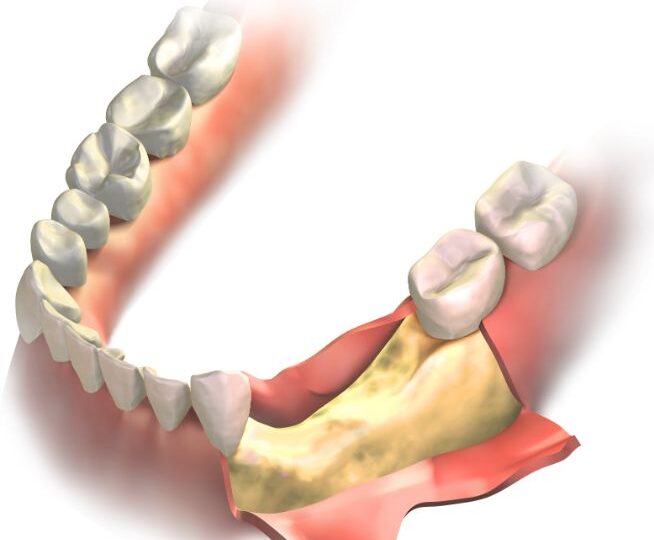 Dental implants Am I a candidate for dental implants?
How bone, gum health, medical history and smoking decide whether dental implants are suitable, and what can improve the odds.
Dental implants Am I a candidate for dental implants?
How bone, gum health, medical history and smoking decide whether dental implants are suitable, and what can improve the odds.
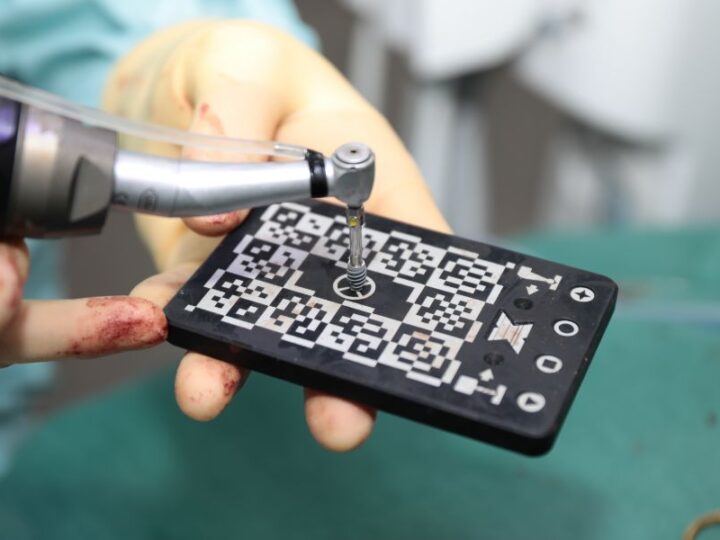 Digital dentistry Guided vs freehand implant surgery: what is the difference?
Static guides, dynamic navigation and freehand placement compared, with the situations where each approach makes sense.
Digital dentistry Guided vs freehand implant surgery: what is the difference?
Static guides, dynamic navigation and freehand placement compared, with the situations where each approach makes sense.
Next step
Talk it through before you decide
Send me a short message about what is going on. You will get an honest answer on whether surgery is the right step, and what the options are.